Spiral dryer fabric
A spiral dryer fabric is built from interlinked monofilament spirals joined by a pintle or connecting yarn, rather than woven as a continuous flat sheet. Hengfeng manufactures this family in-house alongside its woven dryer meshes. It is normally considered where an easily joined, repairable and high-void structure is needed in a dryer section or a drying/conveying process. Because spiral link construction, loop size and seam design interact with permeability and running stability, a configuration is proposed against your machine position rather than chosen from a catalogue number.
Where this construction is evaluated
Spiral link fabrics are used in paper machine dryer sections and in a range of industrial drying and conveying duties. Buyers usually evaluate them when local repairability, an open structure, or a particular joining arrangement matters more than the surface characteristics of a woven flat-yarn mesh. The paper grade, dryer group, top or bottom position, running speed and available ventilation all affect whether a spiral design is the right match.
They are not a universal substitute for a woven dryer fabric. If sheet surface quality, marking behaviour or contact heat transfer is the primary concern, a flat-yarn or round-yarn woven construction may be reviewed instead. Our team compares both options against the same operating data before recommending one.
What we configure
The construction is defined by the spiral loop geometry, the monofilament material and diameter, the joining yarn, the seam arrangement, and the finished width and loop length. Material selection is reviewed against the temperature, humidity, chemical exposure and cleaning practice of the position. Seam compatibility with the machine builder requirements and the existing installation practice is confirmed separately from the fabric body.
Manufacturing and verification
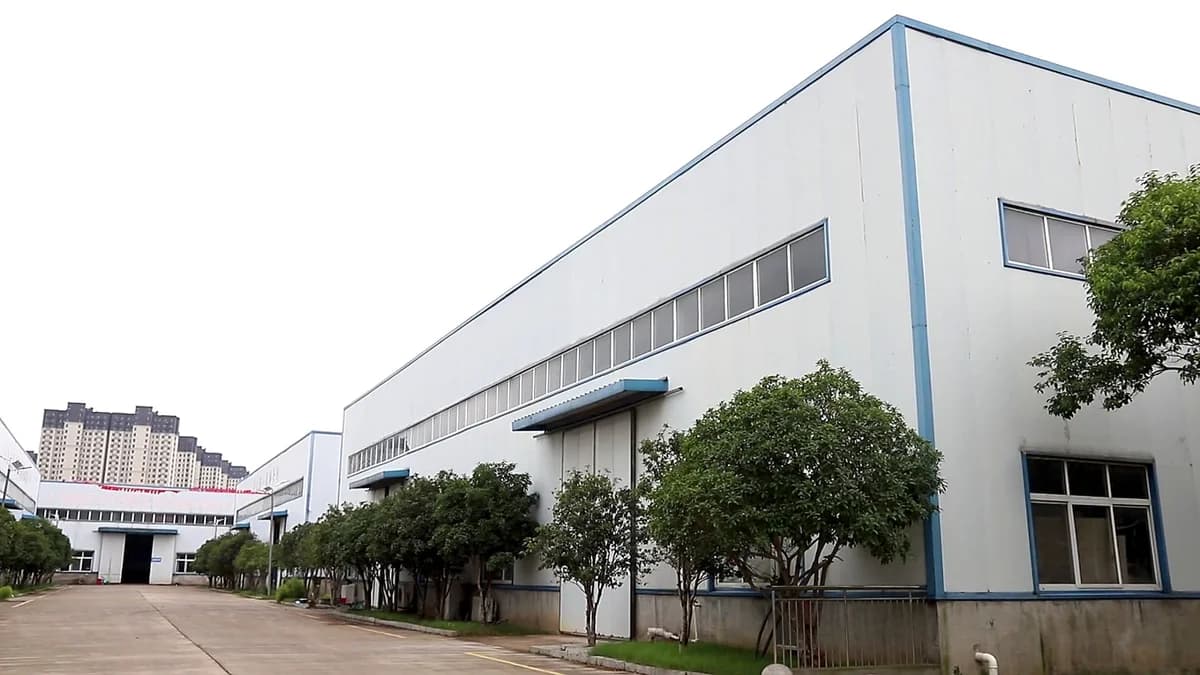
Hengfeng controls monofilament extrusion, weaving, heat setting, seaming and inspection in-house. Every fabric is checked for dimensional stability, seam quality and the agreed permeability before dispatch. Test methods and conditions are stated on the written specification that accompanies a quotation, because permeability values are only comparable when measured under the same conditions.
Configurable dimensions
- Spiral loop size and link geometry
- Monofilament material (PET, PPS or other agreed polymer) and diameter
- Joining / pintle yarn specification
- Seam type, seam orientation and installation method
- Finished width and loop length
- Air permeability target with stated test method and conditions
- Edge treatment and any anti-static requirement
Information to send for a configuration review
A spiral fabric cannot be specified from a product name. Please include as much of the following as is available; leave unknown items blank rather than estimating them.
- Paper grade and basis-weight range, or the industrial material being dried
- Dryer group, position and whether top or bottom fabric
- Machine speed, temperature, humidity and ventilation conditions
- Finished width and loop length, plus any machine-builder installation limits
- Current fabric type, loop size, seam type and observed service observations
- Cleaning practice, contamination or build-up issues and their location
- Required seam type and any photos of the existing seam and wear areas
Industry reference specifications (public sources) — not Hengfeng measurements
These are publicly published, industry-common reference values transcribed from third-party supplier and competitor pages on 9 November 2026, with the source and test conditions shown beside each table. They are NOT Hengfeng test results, NOT a Hengfeng product specification, and NOT a performance or supply commitment. They exist so that a technical discussion can start from comparable terms. Final values are confirmed in a written specification against your machine conditions.
Typical air-permeability ranges by dryer fabric construction
Four woven dryer constructions are commonly organised by air-permeability band. These bands are published as ranges for a structure, not as a value for a specific delivered fabric.
| Construction | Published air-permeability range (CFM) | Published positioning |
|---|---|---|
| Flat yarn, single warp | 160–750 CFM | High air permeability demand; smooth, wide contact area |
| Flat yarn, double warp | 90–375 CFM | Low-to-medium permeability; surface and seam strength |
| Round yarn, 1.5-layer | 400–500 CFM | Hydrolysis-resistant round yarn; packaging grades |
| Round yarn, 2-layer | 500–750 CFM | Hot and dry dryer positions; hydrolysis resistance |
Test conditions & comparability
Test pressure and method are NOT stated on the source pages. CFM figures measured under a different pressure must not be compared with these values.
- The four figures come from four separate grade pages; the source does not publish a single combined table.
Public sources
- Hehuang (forming-dryerfabrics.com)
- Hehuang (forming-dryerfabrics.com)
- Hehuang (forming-dryerfabrics.com)
- Hehuang (forming-dryerfabrics.com)
Accessed: 2026-11-09
Spiral dryer fabric loop types (published parameter table)
Spiral link fabrics are commonly classified as small, medium, large or super loop. The table below reproduces the widely republished loop specification table, including its own dual-unit permeability columns.
| Loop type | Loop width (mm) | Spiral filament Ø (mm) | Connection wire Ø (mm) | Tensile strength (N/cm) | Weight (kg/m²) | Thickness (mm) | Air permeability (m³/m²·h) | Air permeability (CFM @127 Pa) |
|---|---|---|---|---|---|---|---|---|
| Small loop | 5–5.2 | 0.50 | 0.80 | 1800 | 1.00 | 2.10 | 15000 | 937 |
| Medium loop | 8 | 0.68 | 0.90 | 2000 | 1.31 | 2.45 | 18000 | 1125 |
| Medium loop | 7.15 | 0.68 | 0.90 | 2000 | 1.40 | 2.45 | 16000 | 1000 |
| Medium loop | 7.2 | 0.70 | 1.00 | 2200 | 1.50 | 2.45 | 16800 | 1050 |
| Large loop | 8 | 0.90 | 0.90 | 2300 | 1.80 | 3.03 | 19000 | 1188 |
| Large loop | 10 | 0.90 | 1.10 | 2300 | 1.65 | 3.15 | 20000 | 1250 |
| Large loop | 12 | 1.20 | 1.30 | 2600 | 2.35 | 4.30 | 22000 | 1375 |
| Heat-resisting HTR-01 | 6.48 | 0.90 | 0.90 | 2000 | 1.90 | 3.30 | 14000 | 875 |
Test conditions & comparability
The source labels the CFM column "127/pa"; the m³/m²·h column is published without an explicit pressure. A second supplier table lists 840 / 890 / 1000 / 1170 ±30 CFM for small / medium / large / super loop without a stated condition — these two sets must not be compared as if they were equivalent.
- Loop width may be published as a single dimension (e.g. 8 mm) or as a pair (e.g. 4.8 × 10 mm) depending on the supplier table; both notations are kept as published.
- Some spiral belts are filled with round or flat stuffer yarns to reduce permeability, so a delivered belt can differ substantially from the unfilled table value.
Public sources
- Leizhan spiral dryer screen parameter table
- polyestermesh.org spiral mesh table
- HUATAO spiral dryer screen table
Accessed: 2026-11-09
Air-permeability values are comparable only when the unit, differential pressure and test method match. The tables above come from different sources, some without a stated test condition, and cannot be used as acceptance criteria or a performance promise. Binding values are those in the mutually confirmed written specification.
Frequently asked questions
Do you publish standard spiral loop sizes and permeability values?
We do not publish a fixed Hengfeng model catalogue. The loop table on this page is an industry-common reference transcribed from public supplier sheets, with its source and test conditions shown; it is not a Hengfeng measurement. Loop geometry and permeability are set against your machine position, and the binding numeric specification is issued in a written proposal after reviewing your operating data.
Can a spiral dryer fabric replace a woven dryer mesh directly?
Not automatically. Surface marking, sheet support, contact behaviour and seam requirements differ. We compare both constructions against the same position and operating window before recommending a change.
Are these fabrics manufactured by Hengfeng?
Yes. Spiral dryer fabrics are manufactured in-house at Hengfeng, alongside our woven forming and dryer fabrics, using our own monofilament, weaving, heat-setting and seaming lines.
Hengfeng manufactures this family in-house. The parameter tables on this page are publicly published, industry-common reference values transcribed from third-party supplier and competitor pages, with each source and test condition shown next to the table. They are NOT Hengfeng measurements, NOT a Hengfeng product specification and NOT a performance or supply commitment. Model designations, permeability, dimensions and seam details are configured against your machine conditions and become binding only in a written specification. Request a configuration review for that specification.
Request a spiral fabric configuration
Send your machine position and current fabric details. Our engineers will confirm the construction, seam and permeability before quoting.
Send an enquiry