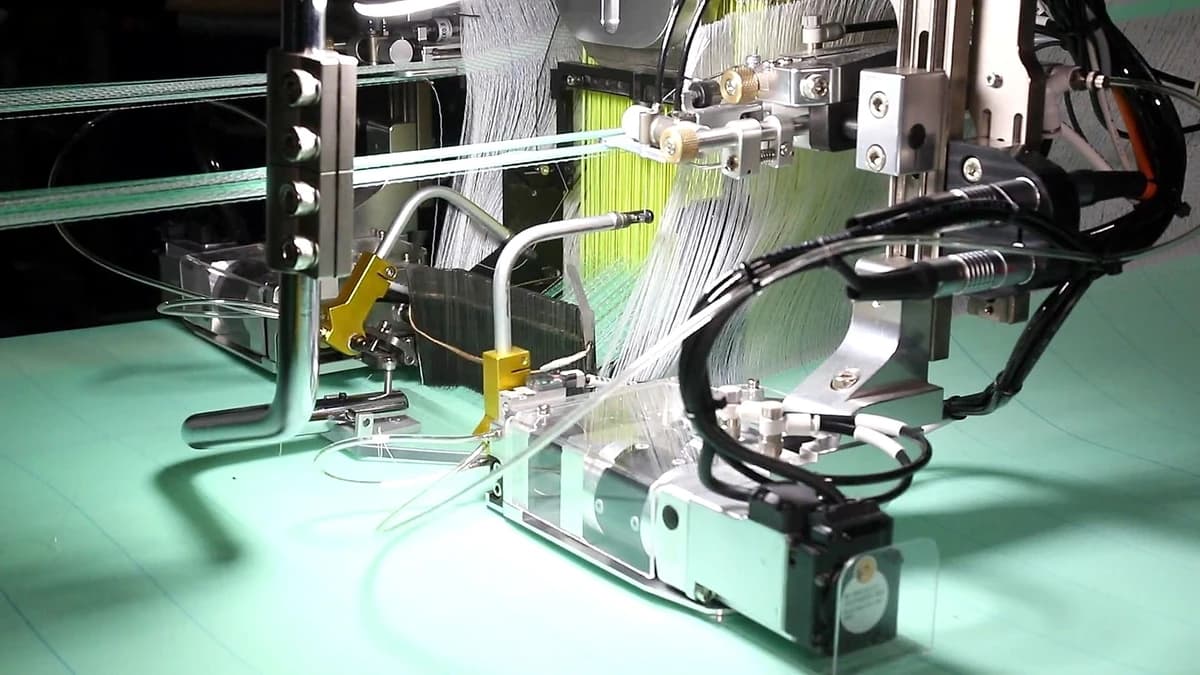
SSB Triple Layer
3CSSBW70204B SSB Triple-Layer Forming Fabric for Tissue
Forming section of high-speed tissue machines.
View technical detailsA forming fabric influences drainage, sheet support and the interface between the furnish and the forming section. Selection should therefore consider furnish, target basis weight, machine speed, forming geometry, retention objectives, wear conditions and the position within a multi-ply arrangement. This catalog groups the supplied models into SSB triple-layer, 2.5-layer and single- or double-layer families. The listed values are model references supplied for this project; final construction and permeability require confirmation for the actual machine.
SSB models in the supplied schedule include distinct sheet-side and wear-side constructions. Compare shaft pattern, yarn dimensions, density, caliper, weight where stated, air permeability and strength. A fine sheet-side pattern may be specified for surface support, while coarser wear-side yarns appear in some packaging-grade models. These descriptions are not a promise of a particular formation result or operating life. Review them against furnish, drainage demand and measured wear on the target position.
The 2.5-layer range spans lightweight cultural and specialty papers through heavier packaging grades. The data describes variations in yarn diameter, density, permeability and layer arrangement. Do not select on basis weight alone: furnish composition, forming-board configuration, vacuum elements, speed and retention system can change the appropriate operating window. If a permeability range is supplied, identify the intended target for the specific position. Where data is absent, request the missing specification rather than substituting a value from a neighboring model.
Single- and double-layer options may suit specific grade, budget or machine requirements, but construction names do not establish suitability by themselves. Compare sheet-side support, drainage, wear-side yarn design, caliper and the fabric’s dimensional requirements. For single-layer designs, include details about forming elements and the support arrangement. For double-layer designs, clarify which face is intended toward the sheet and what wear conditions are expected.
Provide the paper-machine speed, paper grade and basis weight, width, loop length, forming position, current fabric construction, permeability or drainage target, seam details and any known retention or formation constraints. For a multi-ply machine, identify whether the fabric is top, middle or bottom. Include the current model and measured run observations where available. The supplier can then confirm which listed values apply, what remains configurable and which specifications need a technical drawing or written confirmation.
SSB Triple Layer
Forming section of high-speed tissue machines.
View technical detailsSSB Triple Layer
Forming high-grade cultural, printing and writing, and specialty papers.
View technical detailsSSB Triple Layer
Face-layer forming positions on cultural- and coated-paper machines.
View technical detailsSSB Triple Layer
Face-layer forming positions for a range of cultural and coated-paper grades.
View technical detailsSSB Triple Layer
Forming high-grade cultural and specialty papers.
View technical detailsSSB Triple Layer
Forming low-basis-weight corrugating medium and kraft packaging paper.
View technical detailsSSB Triple Layer
Low-basis-weight corrugating medium and kraft packaging paper; the data also lists use as a middle ply in a multi-ply forming arrangement.
View technical detailsSSB Triple Layer
High-speed corrugating-paper machines and kraft packaging-paper positions.
View technical detailsSSB Triple Layer
High-basis-weight corrugating paper and kraft linerboard; the supplied description also identifies use as a bottom fabric in a three-ply forming arrangement.
View technical details2.5-Layer
Low-basis-weight cultural and specialty paper forming positions.
View technical details2.5-Layer
A range of cultural and specialty papers.
View technical details2.5-Layer
Forming cultural and specialty papers.
View technical details2.5-Layer
High-basis-weight corrugating paper, linerboard and coated white board.
View technical details2.5-Layer
High-basis-weight corrugating paper, linerboard and coated white board.
View technical detailsSingle & Double Layer
Specialty-paper forming positions.
View technical detailsSingle & Double Layer
Cultural- and packaging-paper forming; an economical single-layer option.
View technical detailsSingle & Double Layer
Corrugating medium and pulp board.
View technical details