Pulp washing fabric
Pulp washing fabrics run on brownstock washers, pulp drying and thickening equipment, where the fabric must drain consistently while retaining fibre under a continuous washing load. Hengfeng manufactures this family in-house as part of its pulp mill fabric range. The right construction depends on the washer type, stock consistency, discharge condition, shower and chemical environment, and the joining arrangement — so it is configured per installation rather than sold as a fixed catalogue item.
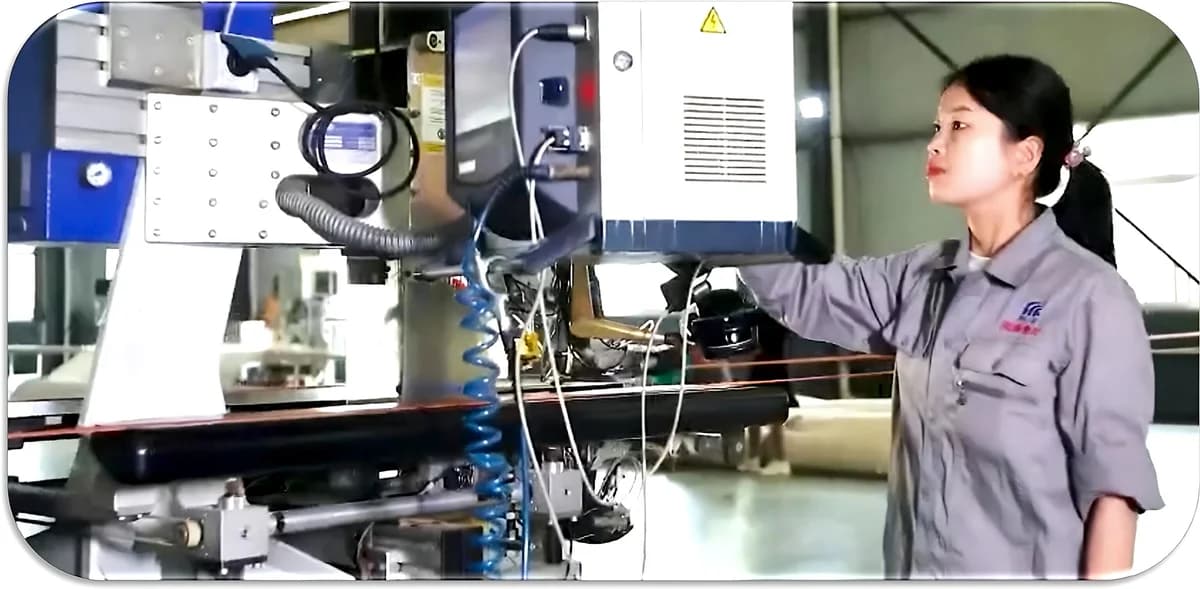
Where the fabric works
Typical positions include vacuum drum or belt washers, twin-wire presses, thickening and washing stages, and pulp drying lines. Each position combines drainage resistance with fibre retention and cake release. A fabric that drains freely but carries fibre over into the filtrate, or one that blinds quickly under the shower chemistry, will cost more in wash losses and cleaning downtime than it saves in drainage.
Selection logic
We start from the washer geometry and stock conditions, then set the weave structure, yarn diameters and surface character. Permeability and retention are considered together and always recorded with the test method. Chemical exposure, temperature and the cleaning regime determine the polymer choice; seam type and edge design are confirmed against the machine builder installation requirements.
In-house manufacture
Monofilament production, weaving, heat setting, seaming and inspection are all performed at Hengfeng. Dimensional stability and seam quality are checked before dispatch, and the agreed test conditions are stated on the written specification accompanying the quotation.
Configurable dimensions
- Weave structure and layer construction
- Monofilament material and yarn diameters
- Drainage / permeability target with stated test conditions
- Fibre retention and cake-release surface character
- Seam or endless joining method and edge treatment
- Finished width and loop length
- Chemical, pH and temperature resistance requirements
Information to send for a configuration review
Provide the washer and stock details below; unknown items may be left blank.
- Washer type and manufacturer, position in the fibre line
- Pulp type, stock consistency and discharge consistency
- Shower arrangement, pressure, temperature and cleaning chemicals
- pH range and any oxidising or bleaching agents present
- Fabric width, length and machine-builder joining limits
- Current fabric construction, retention and blinding observations
- Filtrate clarity or fibre-loss issues and where they occur
Industry reference specifications (public sources) — not Hengfeng measurements
These are publicly published, industry-common reference values transcribed from third-party supplier and competitor pages on 9 November 2026, with the source and test conditions shown beside each table. They are NOT Hengfeng test results, NOT a Hengfeng product specification, and NOT a performance or supply commitment. They exist so that a technical discussion can start from comparable terms. Final values are confirmed in a written specification against your machine conditions.
Herringbone polyester dewatering / filter belt table
This nine-row table is republished across many Chinese filter-media sites and is widely used as a starting point for sludge dewatering, pulp washing and juice pressing belt discussions.
| Mesh no. | Warp Ø (mm) | Weft Ø (mm) | Density warp / weft (roots/cm) | Strength face / clipper seam (N/cm) | Water permeability (S/5L) | Weight (kg/m²) | Thickness (mm) | Air permeability (m³/m²·h) |
|---|---|---|---|---|---|---|---|---|
| 2470 | 0.50 | 0.70 | 24 / 9 | 2000 / 900 | 56.4 | 1.23 | 1.90 | 6130 |
| 26808 | 0.50 | 0.80 | 27 / 8.5 | 2100 / 900 | 60.3 | 1.54 | 2.20 | 5120 |
| 27708 | 0.50 | 0.70 | 28 / 8.5 | 2200 / 900 | 63 | 1.53 | 2.10 | 4120 |
| 22903 | 0.50 | 0.90 | 23 / 5.5 | 2000 / 900 | 48 | 1.40 | 1.90 | 6800 |
| 16803 | 0.70 | 0.80 | 16.3 / 5.9 | 3200 / 1200 | 70 | 1.45 | 1.976 | 5500 |
| 16903 | 0.70 | 0.90 | 17 / 4.5 | 2200 / 900 | 38.6 | 1.70 | 2.0 | 7920 |
| 16903-1 | 0.70 | 0.90 | 16.3 / 5.5 | 3200 / 1200 | 50 | 1.52 | 2.263 | 6500 |
| 121103 | 0.90 | 1.10 | 12.5 / 3.8 | 3600 / 900 | 32.4 | 1.60 | 2.60 | 8610 |
| 151105 | 0.90 | 1.1 | 16 / 6.3 | 4500 / 1200 | 90 | 2.45 | 2.843 | 3800 |
Test conditions & comparability
The published table gives no test pressure for the air-permeability column and no test method for the S/5L water-permeability column. It is a catalogue reference, not an acceptance test.
- The source notes that 16803, 16903 and 16903-1 are used for juice pressing, sludge dewatering and pulp washing.
Public sources
- Sludge dewatering belt parameter table (widely republished)The same nine-row table appears on several Chinese supplier pages; one source is cited rather than listing duplicates.
- Goepe reprint of the dewatering belt table
Accessed: 2026-11-09
Pulp washing and high-speed washing mesh examples
Washing mesh tables are usually keyed by mesh number, filament diameter, density and air permeability. The published list below is reproduced for the high-speed washing series only, where the columns align unambiguously.
| Mesh no. | Warp Ø (mm) | Weft Ø (mm) | Density (roots/cm) | Air permeability (m³/m²·h) |
|---|---|---|---|---|
| 2B3316-380 | 0.28 | 0.5 | 36 | 6000 |
| 2B4216-425 | 0.22 | 0.45 | 42 | 6800 |
| 2B5616-410 | 0.17 | 0.35 | 56 | 5500 |
| 2B6016-350 | 0.17 | 0.35 | 60 | 5000 |
Test conditions & comparability
The source list does not state the test pressure. Other columns on the same published list (weight, caliper, mesh count, aperture) are not aligned consistently in the HTML copy, so they are deliberately omitted rather than guessed.
- The same published list also shows a plain washing mesh 16304 at Ø0.25 / Ø0.30 and 17 roots/cm; its remaining columns are ambiguous and are omitted.
Air-permeability values are comparable only when the unit, differential pressure and test method match. The tables above come from different sources, some without a stated test condition, and cannot be used as acceptance criteria or a performance promise. Binding values are those in the mutually confirmed written specification.
Frequently asked questions
Is permeability the only selection criterion?
No. Retention, cake release, blinding tendency, chemical resistance and seam design are reviewed alongside permeability, and permeability is only meaningful with its test method stated.
Do you publish standard pulp washing models?
We do not publish a fixed Hengfeng model catalogue. The washing-mesh table below is an industry-common reference transcribed from a public supplier list, with its source and the omission of ambiguous columns noted; it is not a Hengfeng measurement. A written specification is issued after reviewing your washer and stock conditions.
Are these fabrics manufactured by Hengfeng?
Yes, in-house on our own monofilament, weaving, heat-setting, seaming and inspection lines.
Hengfeng manufactures this family in-house. The parameter tables on this page are publicly published, industry-common reference values transcribed from third-party supplier and competitor pages, with each source and test condition shown next to the table. They are NOT Hengfeng measurements, NOT a Hengfeng product specification and NOT a performance or supply commitment. Model designations, permeability, dimensions and seam details are configured against your machine conditions and become binding only in a written specification. Request a configuration review for that specification.
Request a pulp washing fabric review
Send your washer type and stock conditions for a written construction proposal.
Send an enquiry